
Sandwich construction uses faces and core for different structural roles, so one overall deflection is not enough to describe its response. This exercise follows the selected bending study through the deformation and the separate face, core and bond-related screening outputs.
Open this exercise in Workbench
Prepare the baseline
Inspect the two face laminates, core and geometry, then check the provenance of any allowables used in the screening calculations. Run the supplied case and record both deflection and the individual checks. Keep the loading and dimensions with your results so that a later comparison does not confuse material effects with geometry changes.
Worked procedure
1. Inspect the two skins, core and bond allowables.
2. Run the supplied sandwich case and examine deflection together with the separate core-shear, face-wrinkling and bond-shear checks. Record the value and input basis of each check rather than reporting only the largest ratio. Explain which check is most restrictive for the supplied assumptions, and retain the distinction between a nominal screening calculation and a resolved damage prediction.
Review checkpoints
Nonzero teaching strengths permit screening checks but are not measured allowables.
Unassessed peel and mixed-mode bonding prevent an overall pass.
Model limits
Illustrative strengths only. Local peel and mixed-mode bond growth are not assessed. Completion is not an overall sandwich pass.
Interpret the comparison
Discuss which check governs for the supplied data and why that conclusion depends on the stated allowables. A nominal bond-shear check is not a resolved crack-growth analysis. If a required property is missing or illustrative, retain that qualification rather than presenting the screen as manufacturing approval.
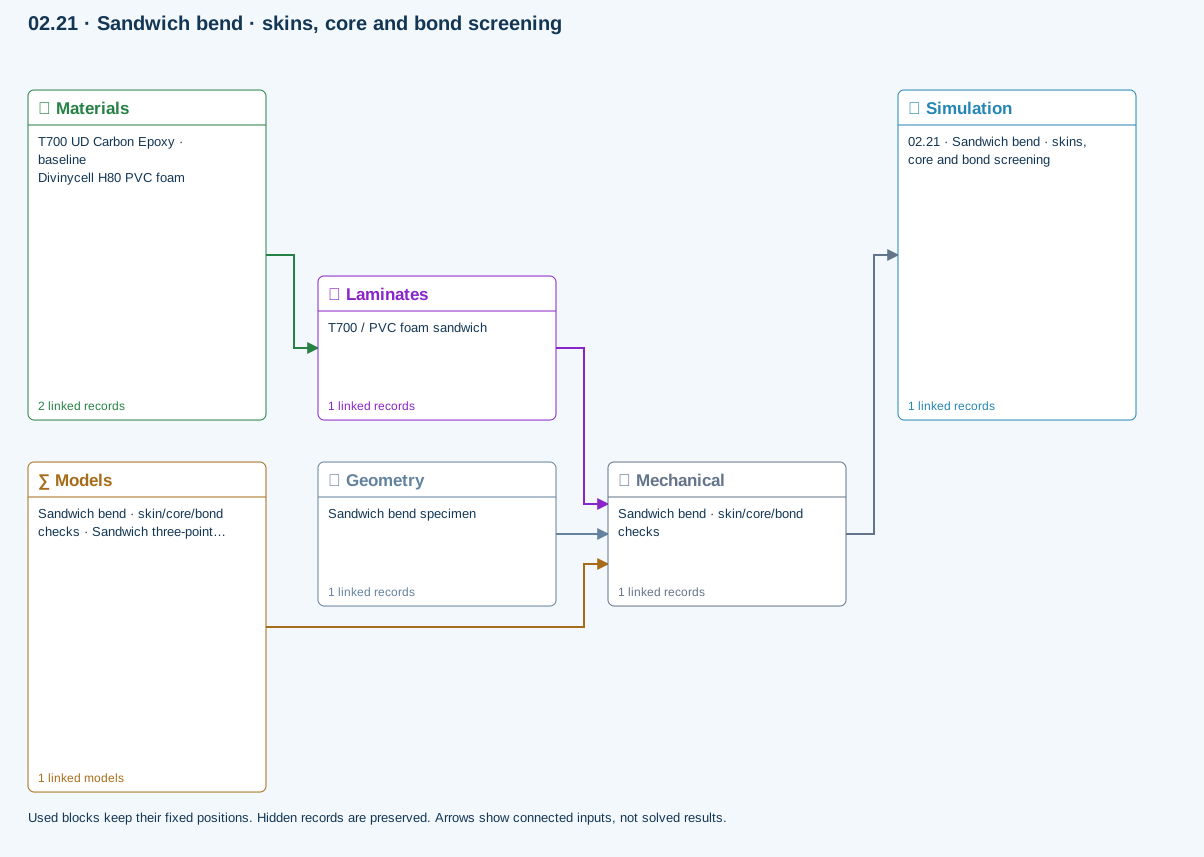
How information passes between models
Materials → Laminates: Stored ply stiffness, strength, density and expansion properties.
Mechanical → Simulation: SIMULATION selects this case and its analysis model; the case owns its applicable cycle and input references.
Laminates → Mechanical: Ply angles and thicknesses, stiffness, mass and ply properties.
Geometry → Mechanical: Part shape and dimensions, thickness or section definition, and model-specific geometric inputs. Each selected case consumes only the dimensions its model supports.
Models → Mechanical: Applied model assignment: Sandwich three-point bend. Model parameters and formulation are used by Mechanical.
Further reading and evidence
- Connect a simulation
- Edit laminate materials, angles and thicknesses
- Run and review a model
- Connected inputs and result freshness
Review the recorded validation scope. Retain the original inputs and solver notices with the results. Representative teaching data are not design allowables.
References and source sections
References are retained with the formulations they support. Software instructions describe implementation scope; a cited source does not establish independent validation of a CDS calculation.