
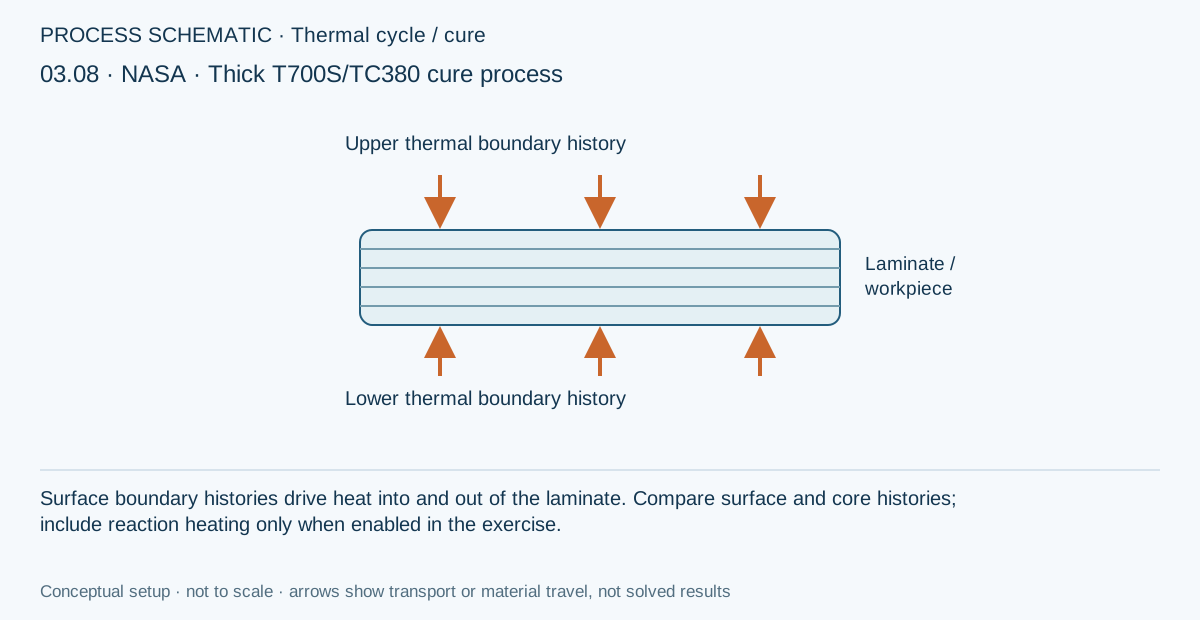
The environment’s temperature schedule and the temperature inside a laminate are not the same history. This exercise follows heat transfer through the thickness and, where enabled, the contribution from resin reaction heat, so that the surface and core can be interpreted as parts of one evolving process.
The starter resin and cycle are not TC380 calibration. The source supplies the schedule and measured checkpoints, but not all kinetics, heat-of-reaction or transport inputs. Source those inputs before a quantitative comparison.
Open this exercise in Workbench
Prepare the baseline
Inspect the initial temperature, surface conditions, schedule and linked material data before running. Use the baseline to identify ramp, dwell and cooling intervals, then make the prescribed comparison while keeping unrelated parameters fixed. For a reaction-on versus reaction-off comparison, retain the distinction between a diagnostic calculation and a physically calibrated process model.
Worked procedure
1. Open the web case and NASA 20200000350. Build 40 plies totaling 25.4 mm; identify and document T700S/TC380 conductivity, density, specific heat, kinetics, reaction heat and cure-modulus data. Do not relabel the starter epoxy as TC380.
2. Enter the oven schedule: room temperature to 107°C at 1.1°C/min; hold 60 min; ramp to 180°C at 1.1°C/min; hold 120 min; cool at no more than 3°C/min to below 49°C. Treat the optional two-hour 180°C post-cure as a separate cycle.
3. Save a conduction baseline with reaction heating disabled, then use the calibrated cure model and compare core, surface and tool-side temperatures, cure state and exotherm. Check time and through-thickness mesh convergence.
4. Review the published approximate 10°C overshoot and maximum through-thickness variation, plus center/tool-side conversion context. Use a duplicate for cycle optimization with explicit peak-temperature and minimum-cure constraints; rerun the final candidate.
Review checkpoints
Matching the oven schedule alone does not validate the cure model.
Keep measured temperature/conversion checkpoints separate from your chosen material calibration and boundary assumptions.
Model limits
One-dimensional through-thickness study, not oven airflow or a general 3D process model. Missing TC380 calibration remains a setup requirement, never a default validated result.
Interpret the comparison
Read the complete history rather than only the final contour. Compare core lag, internal peaks and gradients at stated times, and check the relevant temporal and thickness refinement. If residual stress is discussed, first establish the cooled reference state; a peak stress during processing is not necessarily the stress remaining after cooling.
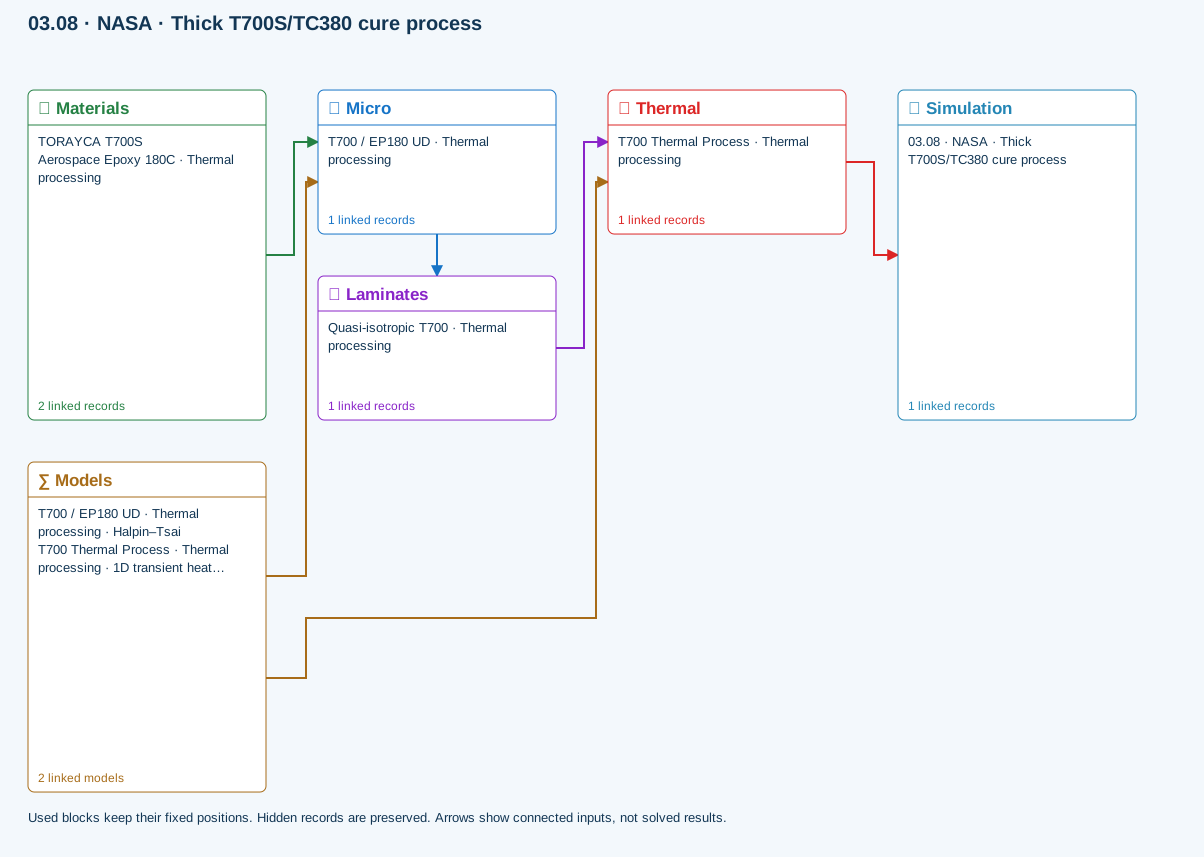
How information passes between models
Micro → Laminates: Predicted ply stiffness, strength, density and expansion properties.
Materials → Micro: Constituent stiffness, strength, density and thermal / moisture properties.
Thermal → Simulation: SIMULATION selects this case and its analysis model; the case owns its applicable cycle and input references.
Laminates → Thermal: Ply angles and thicknesses, stiffness, mass and ply properties.
Models → Micro: Applied model assignment: Halpin–Tsai. Model parameters and formulation are used by Micro.
Models → Thermal: Applied model assignment: 1D transient heat transfer. Model parameters and formulation are used by Thermal.
Further reading and evidence
- Related case study: NASA process cure
- Edit material properties and units
- Enter a process cycle and boundary conditions
- Cure exotherm and evolving modulus
- Run and review a model
- Connected inputs and result freshness
Review the recorded validation scope. Retain the original inputs and solver notices with the results. Representative teaching data are not design allowables.
References and source sections
References are retained with the formulations they support. Software instructions describe implementation scope; a cited source does not establish independent validation of a CDS calculation.