06.4 / Worked examples

Explore a study.
Continue it as an exercise.

Examples and exercises share one curriculum: the same inputs, model choices, tasks and limitations. Choose a checked baseline, then explore a more recent coupled study.

About difficulty levels and time estimates

Instructional ratings describe setup and interpretation effort, not solver accuracy or license access. Existing catalog stages remain separate. Estimates include setup, comparisons and interpretation; they are not solver runtimes and will vary with experience.

  1. Foundation — a single basic material or micromechanics relationship.
  2. Developing — orientation, short-fiber comparisons or an introductory laminate setup.
  3. Intermediate — a structural response, transport history or process study.
  4. Advanced — coupled fields, nonlinear response or optimization with more interpretation.
  5. Integrated — a multi-field study combining thermal, moisture and mechanical effects.

The numbered ring fills as difficulty increases. The clock fill indicates walkthrough duration on a two-hour scale; the adjacent number gives the estimate in minutes. These initial ratings are assigned from the model scope and curriculum stage and can be refined by instructors.

32 matching examples and stored-data studies

Baselines with recorded passing checks

The 2026-09-20 report checks specific quantities against analytical references. Passing those checks is not experimental validation, and does not certify an edited study or the current solver. Open the evidence below each example to see the tested scope, inputs and tolerances.

Workbench workflow

01.01 · Rule of mixtures: fibre volume fraction →

Level 1
Foundation
Est. 15 min
View fixed-layout exercise workflow
Exercise workflow · Open full-size map ↗

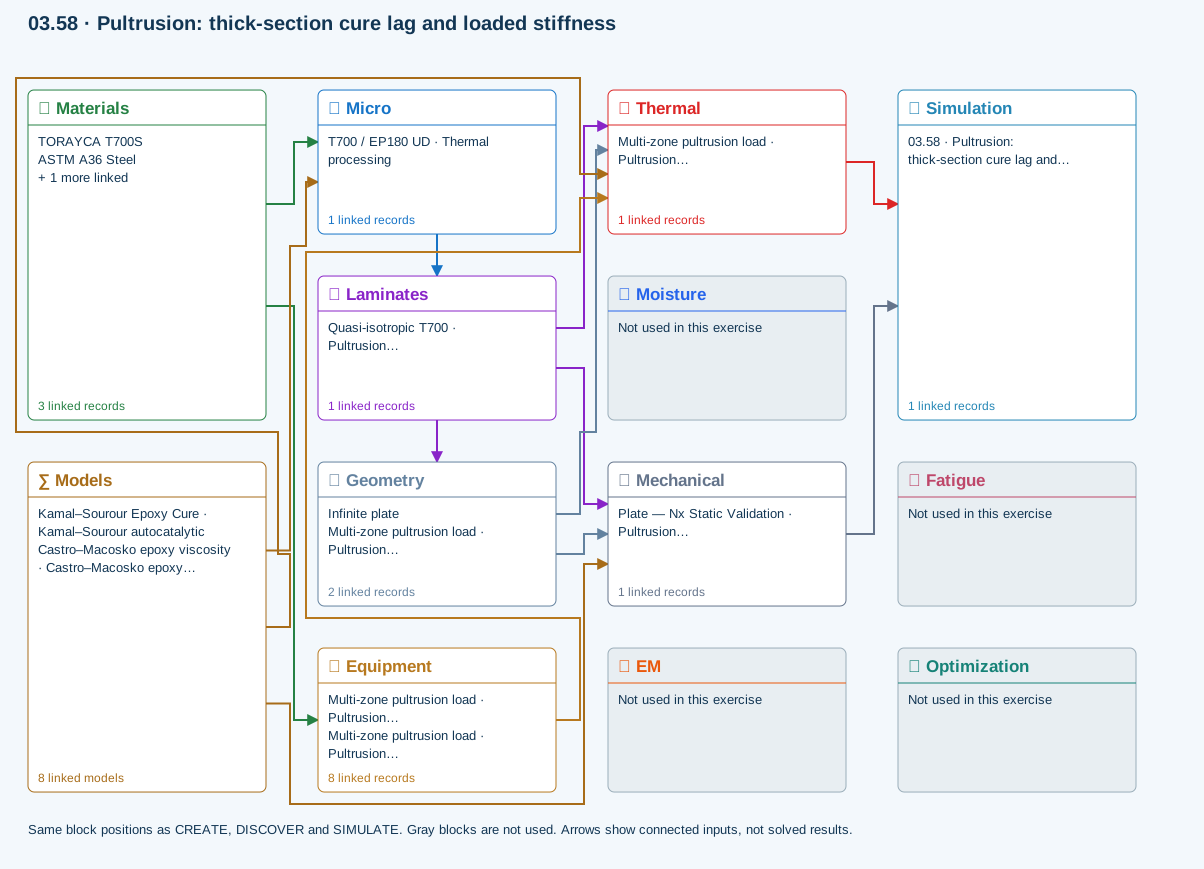
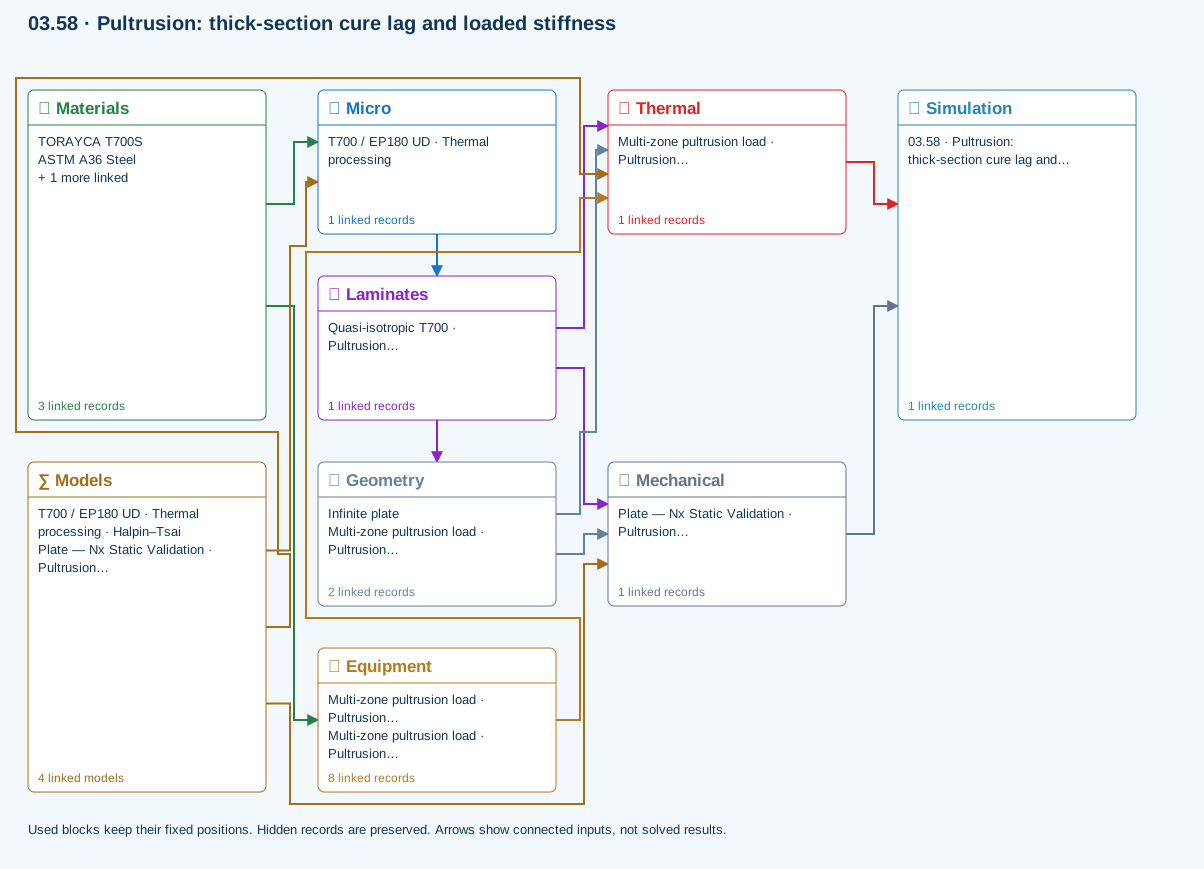
All blocks keep the CREATE / DISCOVER / SIMULATE positions, with Equipment below Geometry; unused records remain disconnected. This changes the view only, not the exercise records.
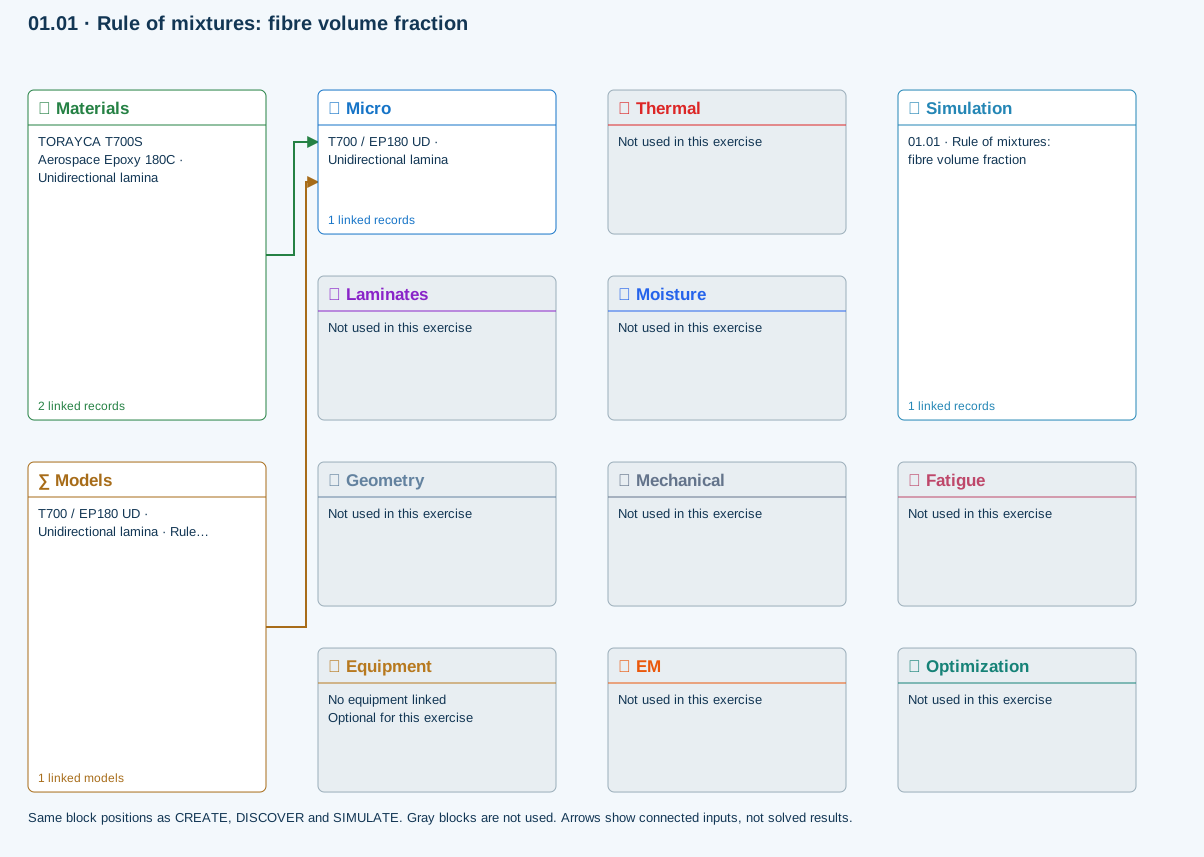
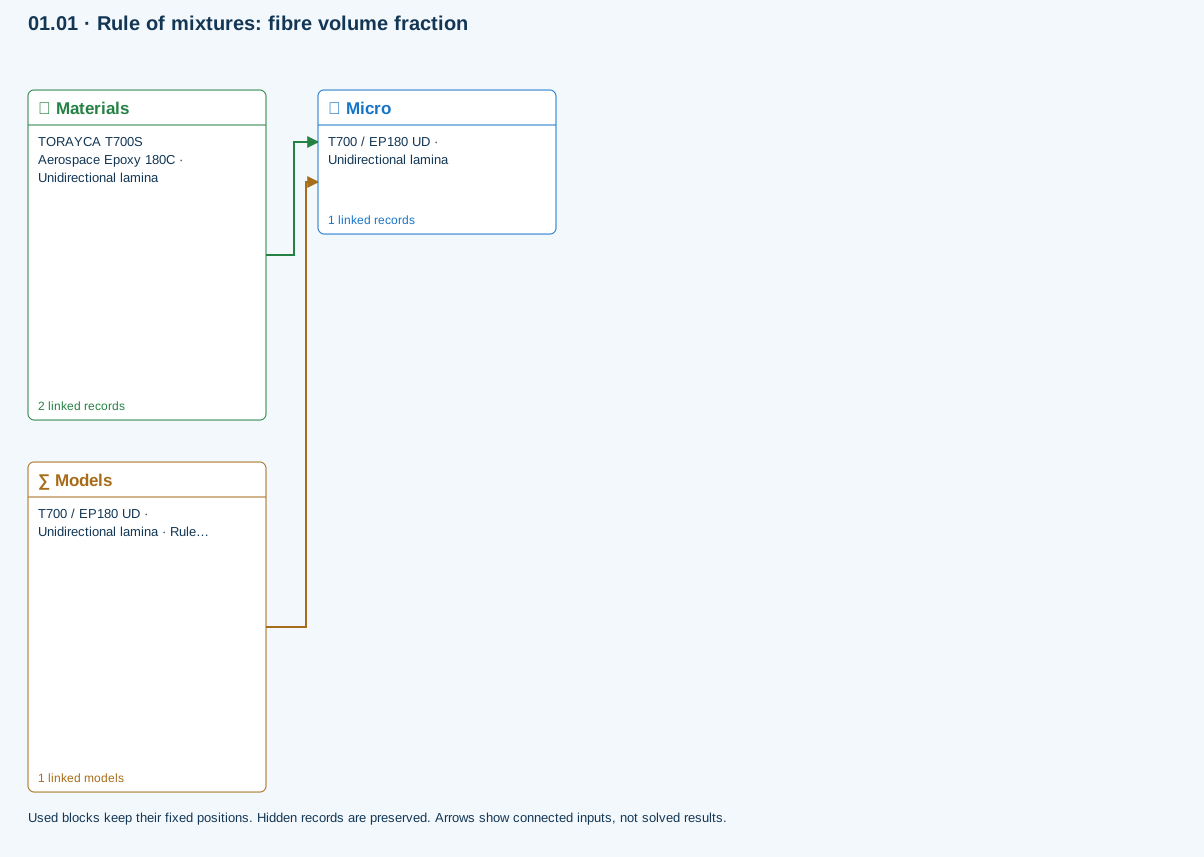
01.01 · Rule of mixtures: fibre volume fraction · Fixed layout with all supplied blocks · not solved results

Open the copied Micro record and identify its fibre and matrix materials.

Rule of mixtures · Voigt · Reuss

Ideal continuous, aligned reinforcement with zero voids. This is a teaching comparison, not a measured material allowable.

Recorded checks · 2026-09-20

Reference validation · 2026-09-20

Benchmark validated — analytical scope

Listed reference-elastic extensional constants only; free curvature, ply stresses, strength and every user variation are outside this badge.

Recorded baseline only—not a certification of the current database, edited inputs, or every output. Analytical agreement is not experimental material or failure validation.

Source validation, comparisons and tested inputs

Execution: Completed (not validation)

Acceptance: absolute error ≤ absolute tolerance + relative tolerance × |reference|.
QuantityCDSReferenceError %Tolerance (relative + absolute)Result
Ex (GPa)51.0195651.019560.0000017137270.01% + 0.00002 GPaPass
Ey (GPa)51.0195651.019560.0000017137270.01% + 0.00002 GPaPass
Gxy (GPa)19.3565919.35659-0.0000028456790.01% + 0.00002 GPaPass
νxy (—)0.317890.3178860.0012604550.01% + 0.00002 —Pass
Micro E1 (GPa)139.38139.3800.01% + 0.00002 GPaPass
Micro E2 (GPa)6.412646.4126390.0000092753620.01% + 0.00002 GPaPass
Micro G12 (GPa)2.987552.987552-0.00006250.01% + 0.00002 GPaPass
Micro ν12 (—)0.260.2600.01% + 0.00002 —Pass
Tested inputs
Reference ply list (GPa, mm, degrees)
[{"e1":139.38,"e2":6.4126394052044615,"g":2.987551867219917,"nu":0.26,"angle":45,"t":0.125},{"e1":139.38,"e2":6.4126394052044615,"g":2.987551867219917,"nu":0.26,"angle":0,"t":0.125},{"e1":139.38,"e2":6.4126394052044615,"g":2.987551867219917,"nu":0.26,"angle":-45,"t":0.125},{"e1":139.38,"e2":6.4126394052044615,"g":2.987551867219917,"nu":0.26,"angle":90,"t":0.125},{"e1":139.38,"e2":6.4126394052044615,"g":2.987551867219917,"nu":0.26,"angle":45,"t":0.125},{"e1":139.38,"e2":6.4126394052044615,"g":2.987551867219917,"nu":0.26,"angle":0,"t":0.125},{"e1":139.38,"e2":6.4126394052044615,"g":2.987551867219917,"nu":0.26,"angle":-45,"t":0.125},{"e1":139.38,"e2":6.4126394052044615,"g":2.987551867219917,"nu":0.26,"angle":90,"t":0.125},{"e1":139.38,"e2":6.4126394052044615,"g":2.987551867219917,"nu":0.26,"angle":90,"t":0.125},{"e1":139.38,"e2":6.4126394052044615,"g":2.987551867219917,"nu":0.26,"angle":-45,"t":0.125},{"e1":139.38,"e2":6.4126394052044615,"g":2.987551867219917,"nu":0.26,"angle":0,"t":0.125},{"e1":139.38,"e2":6.4126394052044615,"g":2.987551867219917,"nu":0.26,"angle":45,"t":0.125},{"e1":139.38,"e2":6.4126394052044615,"g":2.987551867219917,"nu":0.26,"angle":90,"t":0.125},{"e1":139.38,"e2":6.4126394052044615,"g":2.987551867219917,"nu":0.26,"angle":-45,"t":0.125},{"e1":139.38,"e2":6.4126394052044615,"g":2.987551867219917,"nu":0.26,"angle":0,"t":0.125},{"e1":139.38,"e2":6.4126394052044615,"g":2.987551867219917,"nu":0.26,"angle":45,"t":0.125}]

Input SHA-256: 3a2d51c115b2debb0883c5d150330d044589a986f3fd1eaeea75bf83356f7e7a
Solver source SHA-256: 21b57ba5585334998ad98a0b2bac916764c93739a20e81f92e8e37cd50006f4a

  • Ideal continuous, aligned reinforcement with zero voids. This is a teaching comparison, not a measured material allowable.

Download source-validation results (JSON) · Full 138-exercise study
Laminates

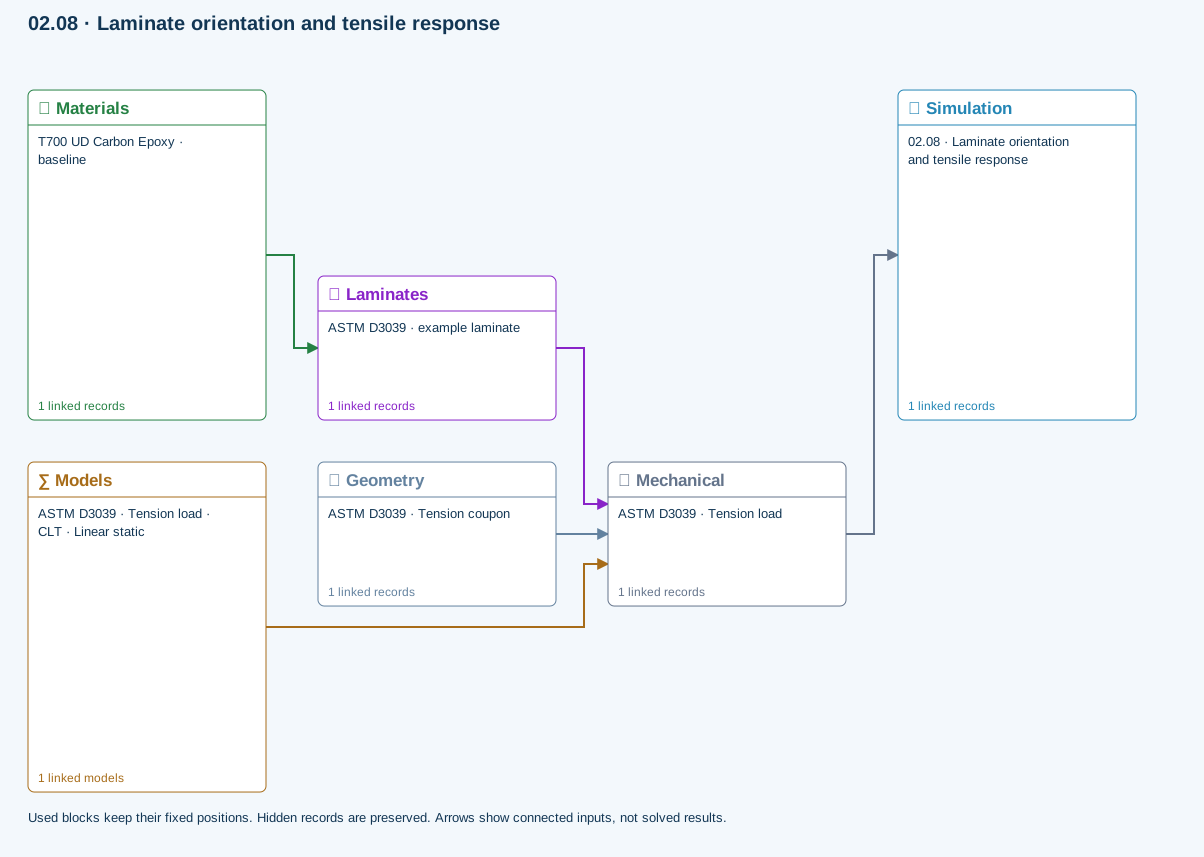
02.08 · Laminate orientation and tensile response →

Level 2
Developing
Est. 25 min
View fixed-layout exercise workflow
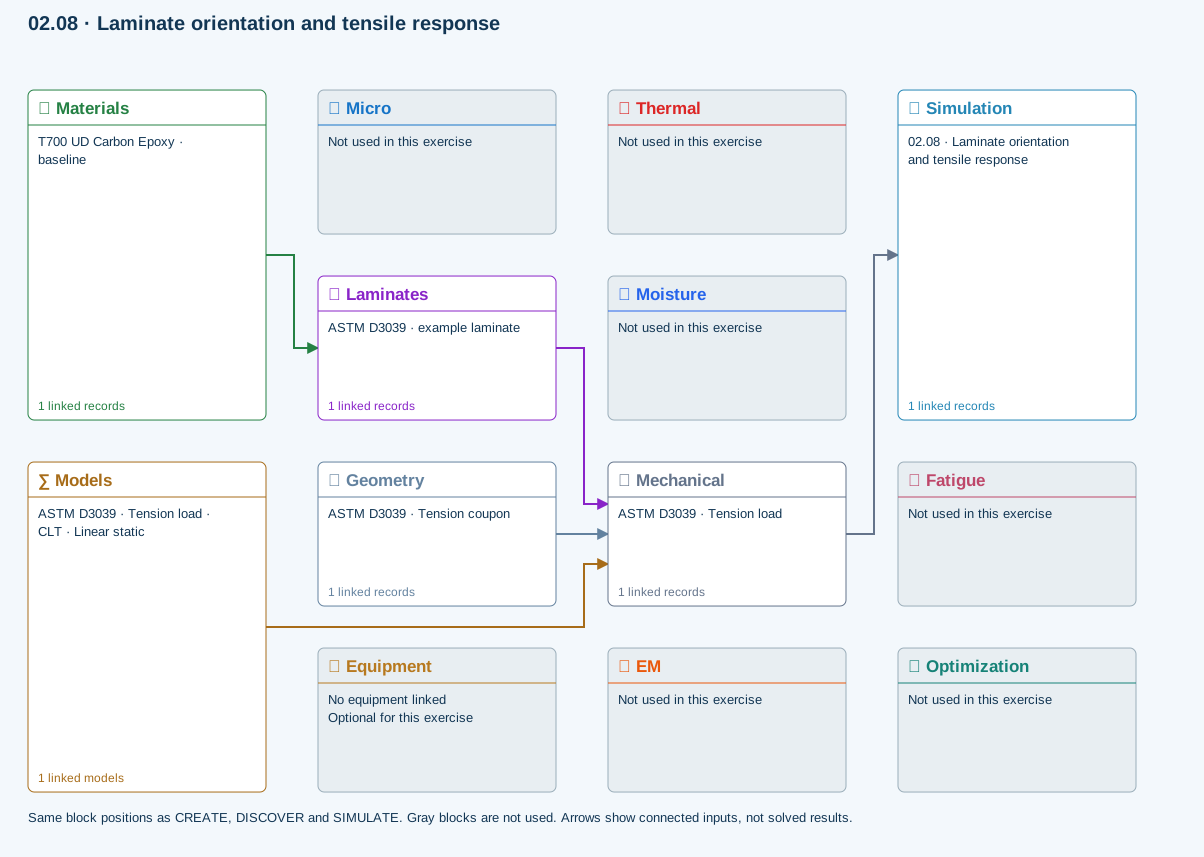
Exercise workflow · Open full-size map ↗

All blocks keep the CREATE / DISCOVER / SIMULATE positions, with Equipment below Geometry; unused records remain disconnected. This changes the view only, not the exercise records.

02.08 · Laminate orientation and tensile response · Fixed layout with all supplied blocks · not solved results

Open the copied laminate and record the initial stacking sequence and total thickness.

Classical laminate theory · Linear static · ASTM D3039-17(2025)-based

ASTM-based teaching geometry, not certification. Grips, tabs, alignment and physical test validity are not simulated.

Recorded checks · 2026-09-20

Reference validation · 2026-09-20

Benchmark validated — analytical scope

Listed reference-elastic extensional constants only; free curvature, ply stresses, strength and every user variation are outside this badge.

Recorded baseline only—not a certification of the current database, edited inputs, or every output. Analytical agreement is not experimental material or failure validation.

Source validation, comparisons and tested inputs

Execution: Completed (not validation)

Acceptance: absolute error ≤ absolute tolerance + relative tolerance × |reference|.
QuantityCDSReferenceError %Tolerance (relative + absolute)Result
Ex (GPa)51.9214751.92147-0.0000074555590.01% + 0.00002 GPaPass
Ey (GPa)51.9214751.92147-0.0000074555590.01% + 0.00002 GPaPass
Gxy (GPa)19.8140719.814070.000019597580.01% + 0.00002 GPaPass
νxy (—)0.310220.31021750.00079347340.01% + 0.00002 —Pass
  • MIT / David Roylance — Laminated Composite Plates ↗Transformed plane-stress constitutive law and laminate extensional stiffness, equations 10–11 and 20–25. Independent strain/stress transformation and thickness integration; prescribed input elasticity is not validated.
Tested inputs
Reference ply list (GPa, mm, degrees)
[{"e1":135,"e2":9,"nu":0.31,"g":4.8,"angle":0,"t":0.25},{"e1":135,"e2":9,"nu":0.31,"g":4.8,"angle":45,"t":0.25},{"e1":135,"e2":9,"nu":0.31,"g":4.8,"angle":-45,"t":0.25},{"e1":135,"e2":9,"nu":0.31,"g":4.8,"angle":90,"t":0.25},{"e1":135,"e2":9,"nu":0.31,"g":4.8,"angle":90,"t":0.25},{"e1":135,"e2":9,"nu":0.31,"g":4.8,"angle":-45,"t":0.25},{"e1":135,"e2":9,"nu":0.31,"g":4.8,"angle":45,"t":0.25},{"e1":135,"e2":9,"nu":0.31,"g":4.8,"angle":0,"t":0.25}]

Input SHA-256: ba41accfb5e0b704588e4ff94716bd72bcc490a9a6d04681b9cf2360da4dc697
Solver source SHA-256: 21b57ba5585334998ad98a0b2bac916764c93739a20e81f92e8e37cd50006f4a

  • ASTM-based teaching geometry, not certification. Grips, tabs, alignment and physical test validity are not simulated.

Download source-validation results (JSON) · Full 138-exercise study
Workbench workflow

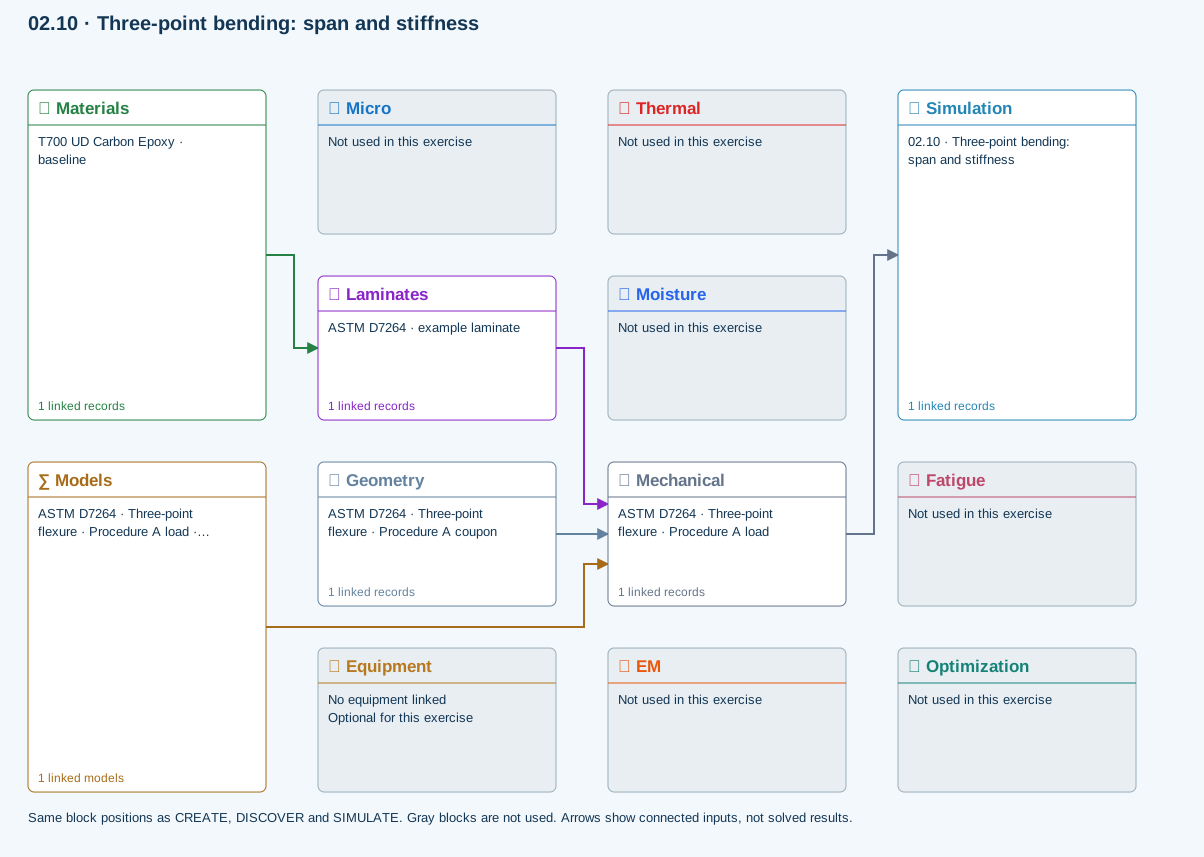
02.10 · Three-point bending: span and stiffness →

Level 3
Intermediate
Est. 25 min
View fixed-layout exercise workflow
Exercise workflow · Open full-size map ↗

All blocks keep the CREATE / DISCOVER / SIMULATE positions, with Equipment below Geometry; unused records remain disconnected. This changes the view only, not the exercise records.

02.10 · Three-point bending: span and stiffness · Fixed layout with all supplied blocks · not solved results

Inspect specimen width, laminate thickness, support span and central force.

Euler–Bernoulli beam · ASTM D7264-26-based

Procedure A teaching setup. Transverse shear deformation, roller contact and indentation are excluded.

Recorded checks · 2026-09-20

Reference validation · 2026-09-20

Benchmark validated — analytical scope

Central-load beam deflection and shear, conditional on the reported effective Ex. Material elasticity, ply stress and failure not validated.

Recorded baseline only—not a certification of the current database, edited inputs, or every output. Analytical agreement is not experimental material or failure validation.

Source validation, comparisons and tested inputs

Execution: Completed (not validation)

Acceptance: absolute error ≤ absolute tolerance + relative tolerance × |reference|.
QuantityCDSReferenceError %Tolerance (relative + absolute)Result
Ex (GPa)51.9214751.92147-0.0000074555590.01% + 0.00002 GPaPass
Ey (GPa)51.9214751.92147-0.0000074555590.01% + 0.00002 GPaPass
Gxy (GPa)19.8140719.814070.000019597580.01% + 0.00002 GPaPass
νxy (—)0.310220.31021750.00079347340.01% + 0.00002 —Pass
Maximum deflection (mm)1.2136671.2136670.000007455560.05% + 0.00002 mmPass
Maximum shear (N)505000.01% + 0.00002 NPass
Tested inputs
Reference ply list (GPa, mm, degrees)
[{"e1":135,"e2":9,"nu":0.31,"g":4.8,"angle":0,"t":0.5},{"e1":135,"e2":9,"nu":0.31,"g":4.8,"angle":45,"t":0.5},{"e1":135,"e2":9,"nu":0.31,"g":4.8,"angle":-45,"t":0.5},{"e1":135,"e2":9,"nu":0.31,"g":4.8,"angle":90,"t":0.5},{"e1":135,"e2":9,"nu":0.31,"g":4.8,"angle":90,"t":0.5},{"e1":135,"e2":9,"nu":0.31,"g":4.8,"angle":-45,"t":0.5},{"e1":135,"e2":9,"nu":0.31,"g":4.8,"angle":45,"t":0.5},{"e1":135,"e2":9,"nu":0.31,"g":4.8,"angle":0,"t":0.5}]
Beam benchmark inputs
{"widthMm":13,"heightMm":4,"spanMm":128,"forceN":100,"conditionalExGPa":51.92147387103631}

Input SHA-256: 73500ec48dcf98642af3ec9439f5866e4959b4bc4343099a19b18961cb9d9124
Solver source SHA-256: 21b57ba5585334998ad98a0b2bac916764c93739a20e81f92e8e37cd50006f4a

  • Procedure A teaching setup. Transverse shear deformation, roller contact and indentation are excluded.

Download source-validation results (JSON) · Full 138-exercise study
Workbench workflow

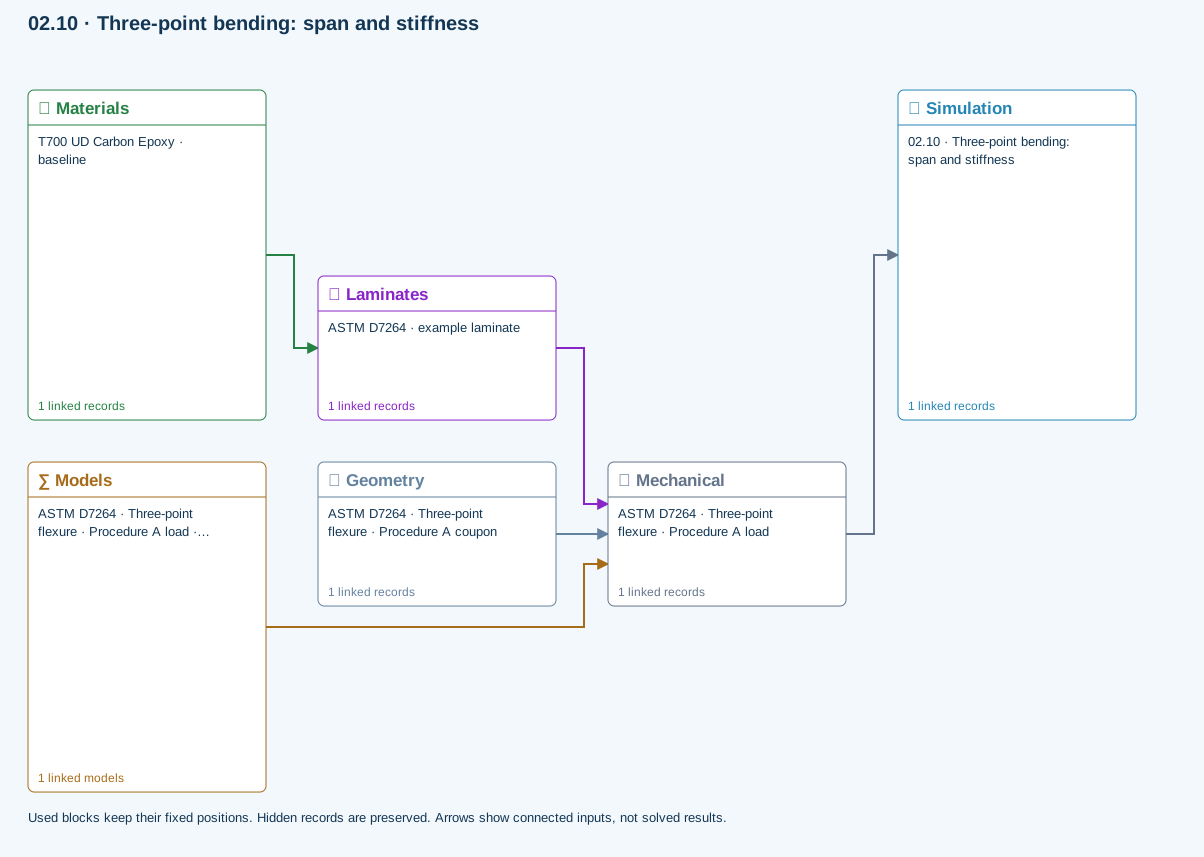
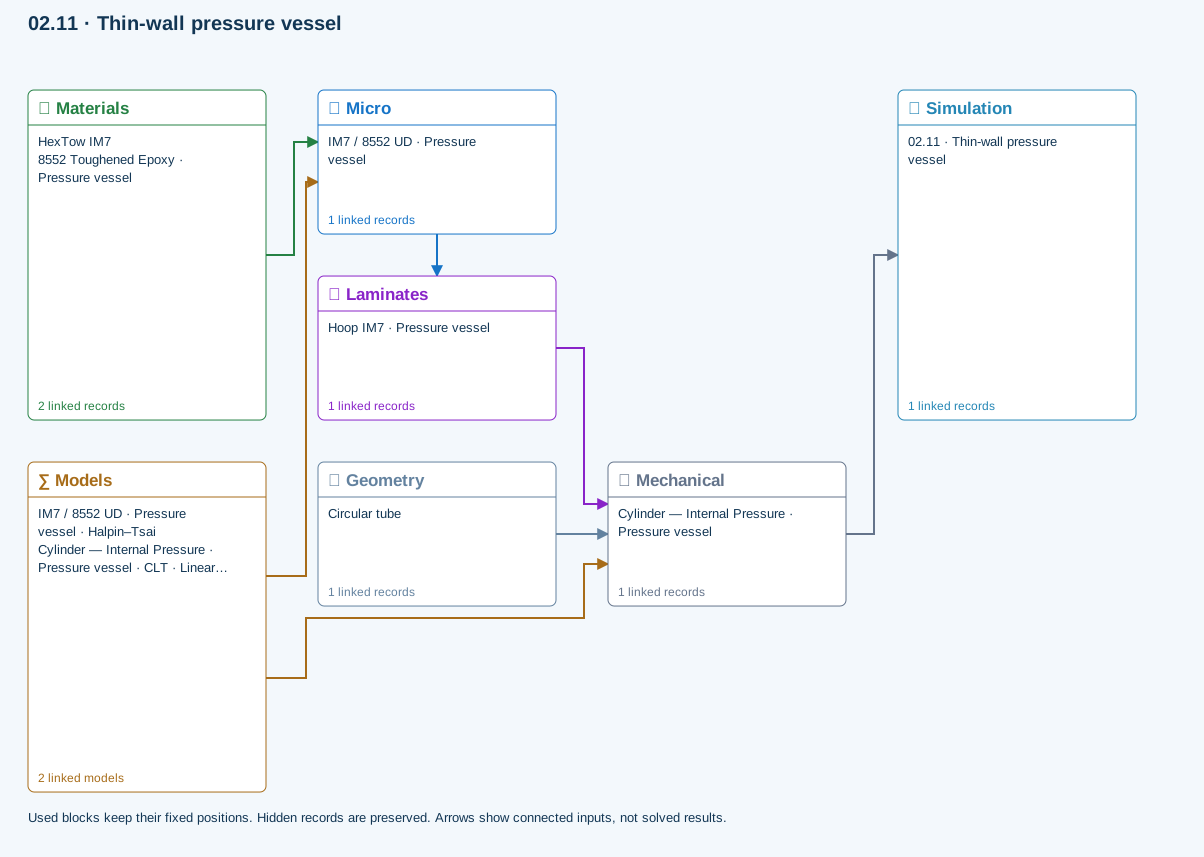
02.11 · Thin-wall pressure vessel →

Level 3
Intermediate
Est. 30 min
View fixed-layout exercise workflow
Exercise workflow · Open full-size map ↗

All blocks keep the CREATE / DISCOVER / SIMULATE positions, with Equipment below Geometry; unused records remain disconnected. This changes the view only, not the exercise records.

02.11 · Thin-wall pressure vessel · Fixed layout with all supplied blocks · not solved results

Inspect the tube dimensions in Geometry and pressure/end conditions in CASES.

Thin-wall membrane · Classical laminate theory

Thin-wall membrane theory: no through-wall radial stress profile or local end effects.

Recorded checks · 2026-09-20

Reference validation · 2026-09-20

Benchmark validated — analytical scope

Thin-wall pressure equilibrium and orthotropic biaxial strain comparison; stiffness inputs are conditional where Micro closure has not been verified.

Recorded baseline only—not a certification of the current database, edited inputs, or every output. Analytical agreement is not experimental material or failure validation.

Source validation, comparisons and tested inputs

Execution: Completed (not validation)

Nonzero-void closure has no matched published calibration in this study

Acceptance: absolute error ≤ absolute tolerance + relative tolerance × |reference|.
QuantityCDSReferenceError %Tolerance (relative + absolute)Result
Hoop stress (MPa)56.456.400.01% + 0.00002 MPaPass
Axial stress (MPa)28.228.200.01% + 0.00002 MPaPass
Hoop strain including Poisson coupling (µε)755.3712755.36980.00018240250.05% + 0.01 µεPass
Axial strain including Poisson coupling (µε)246.3161246.31320.0011490210.05% + 0.01 µεPass
  • MIT / David Roylance — Pressure Vessels ↗Equations 2–3, printed page 3; orthotropic strain compliance from laminated plates reference. Thin-wall, closed-end pristine cylinder. No slit, fracture or failure-pressure validation.
  • MIT / David Roylance — Laminated Composite Plates ↗Transformed plane-stress constitutive law and laminate extensional stiffness, equations 10–11 and 20–25. Independent strain/stress transformation and thickness integration; prescribed input elasticity is not validated.
Tested inputs
Pressure reference inputs
{"pressureMPa":2.4,"externalPressureMPa":0,"innerRadiusMm":47,"wallMm":2,"closed":true,"axialNPerM":0}

Input SHA-256: cb6efa92f6b12cd7b88acab692bd47542d9010e4777d5feb4b174f16c7212729
Solver source SHA-256: 21b57ba5585334998ad98a0b2bac916764c93739a20e81f92e8e37cd50006f4a

  • Thin-wall membrane theory: no through-wall radial stress profile or local end effects.

Download source-validation results (JSON) · Full 138-exercise study
Laminates

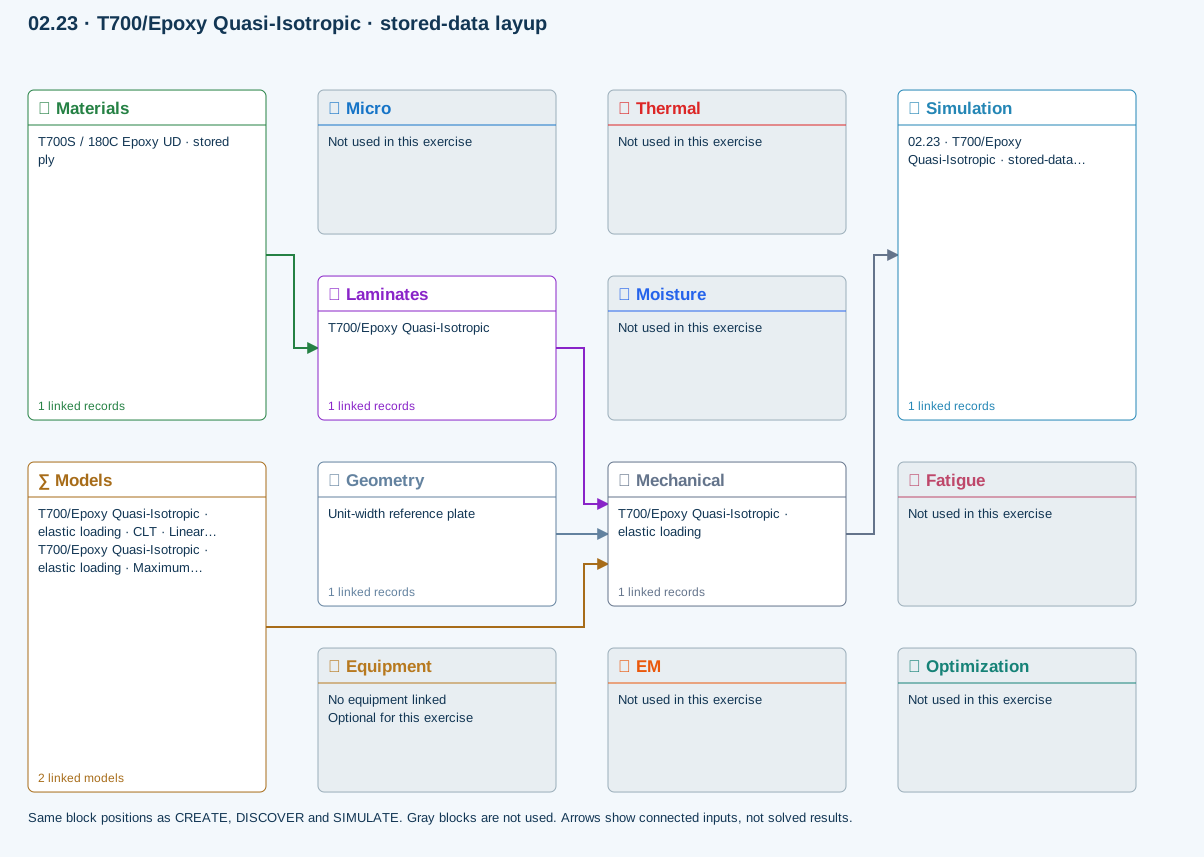
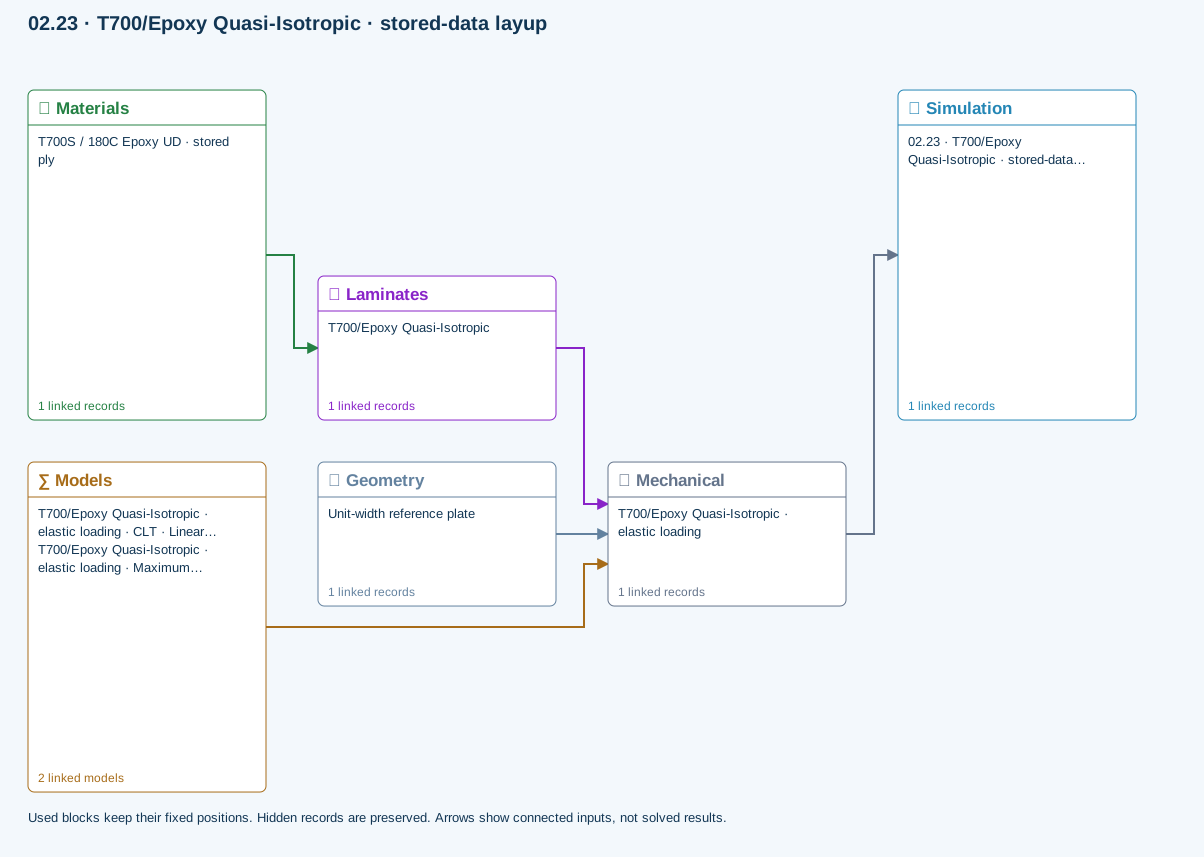
02.23 · T700/Epoxy Quasi-Isotropic · stored-data layup →

Level 2
Developing
Est. 20 min
View fixed-layout exercise workflow
Exercise workflow · Open full-size map ↗

All blocks keep the CREATE / DISCOVER / SIMULATE positions, with Equipment below Geometry; unused records remain disconnected. This changes the view only, not the exercise records.

02.23 · T700/Epoxy Quasi-Isotropic · stored-data layup · Fixed layout with all supplied blocks · not solved results

Trace the stored material-to-laminate path. Inspect original file, record ID, property status and units; Micro is intentionally not used.

Stored lamina elasticity · Classical laminate theory · Maximum stress

Stored original ply properties; original homogenization and failure-model selections are not rerun. Maximum-stress screening uses original teaching strengths, not qualified allowables. Linear CLT resultants only: no grip/edge boundary layers, buckling, delamination, progressive growth or process coupling. Completion is not validation or a physical pass.

Recorded checks · 2026-09-20

Reference validation · 2026-09-20

Benchmark validated — analytical scope

Listed reference-elastic extensional constants only; free curvature, ply stresses, strength and every user variation are outside this badge.

Recorded baseline only—not a certification of the current database, edited inputs, or every output. Analytical agreement is not experimental material or failure validation.

Source validation, comparisons and tested inputs

Execution: Completed (not validation)

Acceptance: absolute error ≤ absolute tolerance + relative tolerance × |reference|.
QuantityCDSReferenceError %Tolerance (relative + absolute)Result
Ex (GPa)51.5259851.525980.0000064942510.01% + 0.00002 GPaPass
Ey (GPa)51.5259851.525980.0000064942510.01% + 0.00002 GPaPass
Gxy (GPa)19.6770419.677040.000019572390.01% + 0.00002 GPaPass
νxy (—)0.309290.3092921-0.00068465390.01% + 0.00002 —Pass
  • MIT / David Roylance — Laminated Composite Plates ↗Transformed plane-stress constitutive law and laminate extensional stiffness, equations 10–11 and 20–25. Independent strain/stress transformation and thickness integration; prescribed input elasticity is not validated.
Tested inputs
Reference ply list (GPa, mm, degrees)
[{"e1":134,"e2":8.8,"nu":0.31,"g":4.800000000000001,"angle":0,"t":0.125},{"e1":134,"e2":8.8,"nu":0.31,"g":4.800000000000001,"angle":45,"t":0.125},{"e1":134,"e2":8.8,"nu":0.31,"g":4.800000000000001,"angle":-45,"t":0.125},{"e1":134,"e2":8.8,"nu":0.31,"g":4.800000000000001,"angle":90,"t":0.125},{"e1":134,"e2":8.8,"nu":0.31,"g":4.800000000000001,"angle":90,"t":0.125},{"e1":134,"e2":8.8,"nu":0.31,"g":4.800000000000001,"angle":-45,"t":0.125},{"e1":134,"e2":8.8,"nu":0.31,"g":4.800000000000001,"angle":45,"t":0.125},{"e1":134,"e2":8.8,"nu":0.31,"g":4.800000000000001,"angle":0,"t":0.125}]

Input SHA-256: d29d55ba73e3fccab2e990636e95779f9673872bb8fc0863a20e8b461b61ea28
Solver source SHA-256: 21b57ba5585334998ad98a0b2bac916764c93739a20e81f92e8e37cd50006f4a

  • Stored original ply properties; original homogenization and failure-model selections are not rerun. Maximum-stress screening uses original teaching strengths, not qualified allowables. Linear CLT resultants only: no grip/edge boundary layers, buckling, delamination, progressive growth or process coupling. Completion is not validation or a physical pass.

Download source-validation results (JSON) · Full 138-exercise study
Structural response

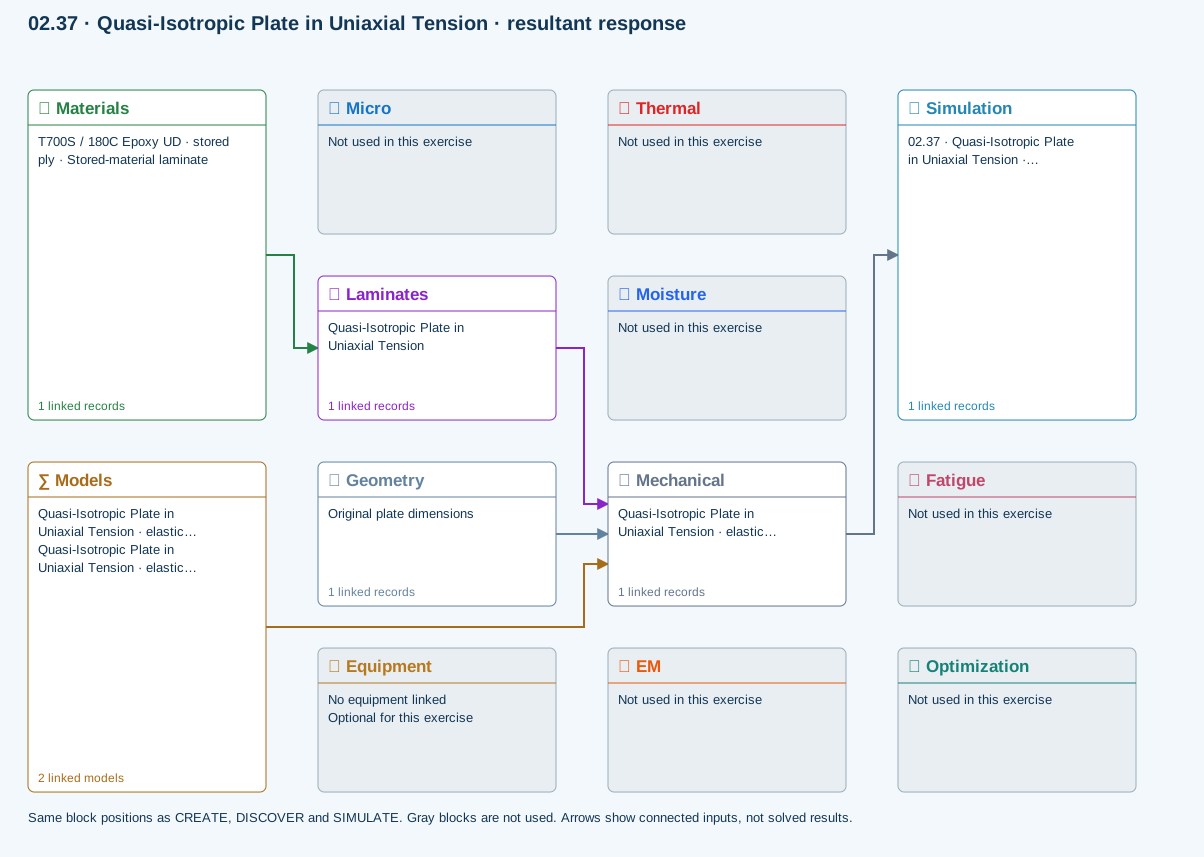
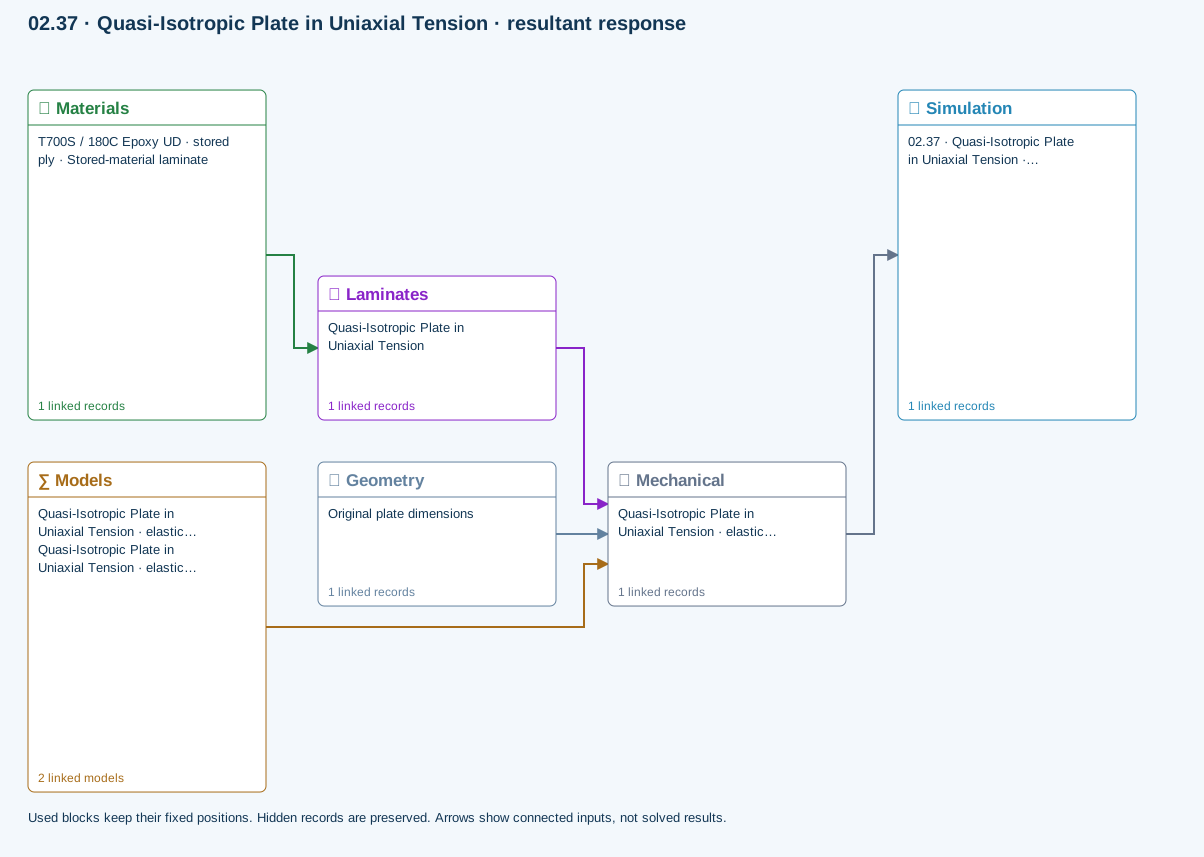
02.37 · Quasi-Isotropic Plate in Uniaxial Tension · resultant response →

Level 3
Intermediate
Est. 20 min
View fixed-layout exercise workflow
Exercise workflow · Open full-size map ↗

All blocks keep the CREATE / DISCOVER / SIMULATE positions, with Equipment below Geometry; unused records remain disconnected. This changes the view only, not the exercise records.

02.37 · Quasi-Isotropic Plate in Uniaxial Tension · resultant response · Fixed layout with all supplied blocks · not solved results

Trace the stored material-to-laminate path. Inspect original file, record ID, property status and units; Micro is intentionally not used.

Stored lamina elasticity · Classical laminate theory · Maximum stress

Stored original ply properties; original homogenization and failure-model selections are not rerun. Maximum-stress screening uses original teaching strengths, not qualified allowables. Linear CLT resultants only: no grip/edge boundary layers, buckling, delamination, progressive growth or process coupling. Completion is not validation or a physical pass.

Recorded checks · 2026-09-20

Reference validation · 2026-09-20

Benchmark validated — analytical scope

Listed reference-elastic extensional constants only; free curvature, ply stresses, strength and every user variation are outside this badge.

Recorded baseline only—not a certification of the current database, edited inputs, or every output. Analytical agreement is not experimental material or failure validation.

Source validation, comparisons and tested inputs

Execution: Completed (not validation)

Acceptance: absolute error ≤ absolute tolerance + relative tolerance × |reference|.
QuantityCDSReferenceError %Tolerance (relative + absolute)Result
Ex (GPa)51.5259851.525980.0000064942510.01% + 0.00002 GPaPass
Ey (GPa)51.5259851.525980.0000064942510.01% + 0.00002 GPaPass
Gxy (GPa)19.6770419.677040.000019572390.01% + 0.00002 GPaPass
νxy (—)0.309290.3092921-0.00068465390.01% + 0.00002 —Pass
  • MIT / David Roylance — Laminated Composite Plates ↗Transformed plane-stress constitutive law and laminate extensional stiffness, equations 10–11 and 20–25. Independent strain/stress transformation and thickness integration; prescribed input elasticity is not validated.
Tested inputs
Reference ply list (GPa, mm, degrees)
[{"e1":134,"e2":8.8,"nu":0.31,"g":4.800000000000001,"angle":0,"t":0.125},{"e1":134,"e2":8.8,"nu":0.31,"g":4.800000000000001,"angle":45,"t":0.125},{"e1":134,"e2":8.8,"nu":0.31,"g":4.800000000000001,"angle":-45,"t":0.125},{"e1":134,"e2":8.8,"nu":0.31,"g":4.800000000000001,"angle":90,"t":0.125},{"e1":134,"e2":8.8,"nu":0.31,"g":4.800000000000001,"angle":90,"t":0.125},{"e1":134,"e2":8.8,"nu":0.31,"g":4.800000000000001,"angle":-45,"t":0.125},{"e1":134,"e2":8.8,"nu":0.31,"g":4.800000000000001,"angle":45,"t":0.125},{"e1":134,"e2":8.8,"nu":0.31,"g":4.800000000000001,"angle":0,"t":0.125}]

Input SHA-256: 3ef73bcdba95d1ebd1ed193d9d9dad102d88023e7236be9f82eb4999b749a916
Solver source SHA-256: 21b57ba5585334998ad98a0b2bac916764c93739a20e81f92e8e37cd50006f4a

  • Stored original ply properties; original homogenization and failure-model selections are not rerun. Maximum-stress screening uses original teaching strengths, not qualified allowables. Linear CLT resultants only: no grip/edge boundary layers, buckling, delamination, progressive growth or process coupling. Completion is not validation or a physical pass.

Download source-validation results (JSON) · Full 138-exercise study
Recent coupled-study exercises

Explore reaction heating, moisture-induced curvature and pultrusion. These exercises are selected from the maintained catalog; their teaching objectives are not claims of validated manufacturing predictions. The small diagrams show model connections, not calculated results.

Processing

03.58 · Pultrusion: thick-section cure lag and loaded stiffness →

Level 4
Advanced
Est. 40 min
View fixed-layout exercise workflow
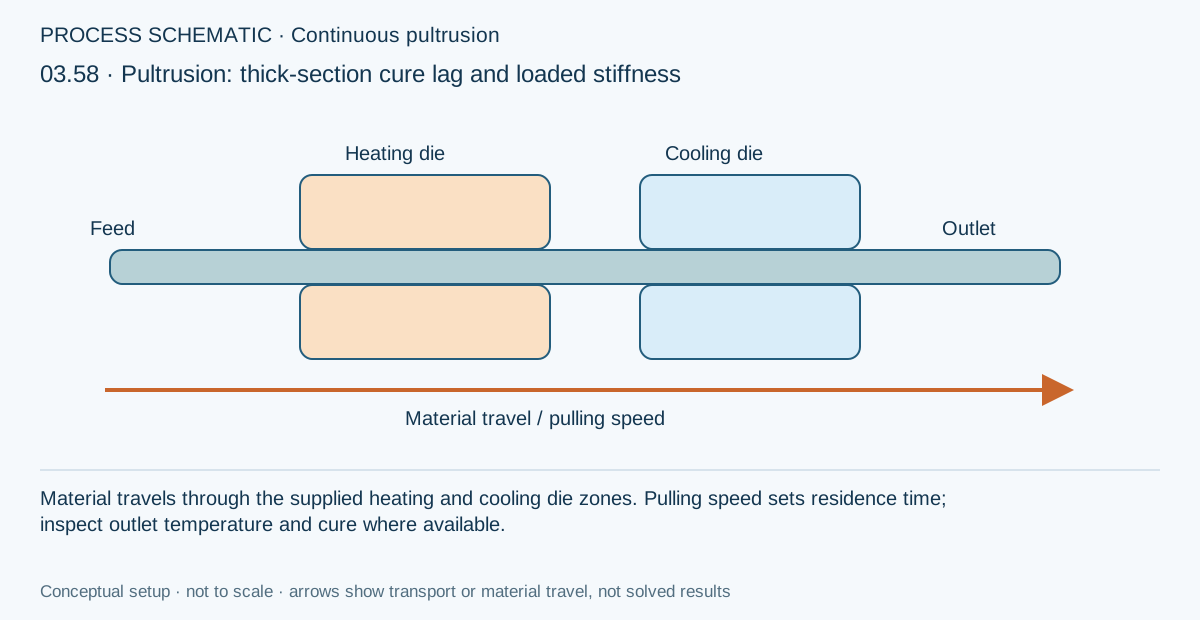
Physical process schematic · Open full-size schematic ↗
03.58 · Pultrusion: thick-section cure lag and loaded stiffness — Material travels through the supplied heating and cooling die zones. Pulling speed sets residence time; inspect outlet temperature and cure where available.

Conceptual setup, not a solved result. Use the existing live process view in Workbench to inspect this exercise’s linked equipment, boundary settings and results.

Exercise workflow · Open full-size map ↗

All blocks keep the CREATE / DISCOVER / SIMULATE positions, with Equipment below Geometry; unused records remain disconnected. This changes the view only, not the exercise records.

03.58 · Pultrusion: thick-section cure lag and loaded stiffness · Fixed layout with all supplied blocks · not solved results

Run the 4 mm profile at 0.1 m/min in the multi-zone die.

1D pultrusion thermal cure · Kamal–Sourour cure kinetics · CHILE cure-dependent modulus · Classical laminate theory · Thermomechanical coupling

Hypothetical teaching process using existing T700/epoxy laminate properties and illustrative cure parameters, not a calibrated pultrusion recipe. Constant-speed moving section; no axial conduction, impregnation, leakage, die thermal mass or pulling-force prediction. Use Thermal Run, not batch-cycle optimization. Sequential outlet-state structural screening under a prescribed resultant; no pulling force, die friction, impregnation or load feedback into the thermal solution.

Illustrative study · not presented as a verified benchmark.

Moisture

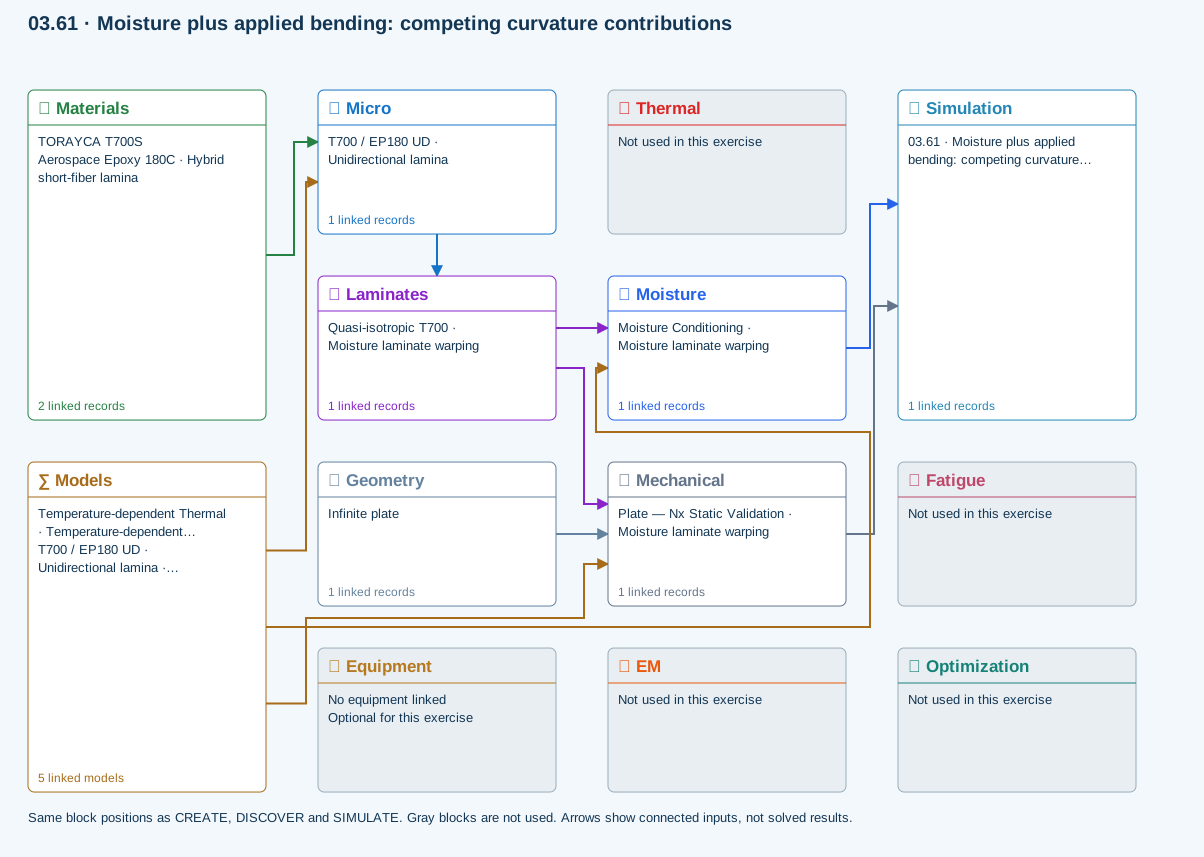
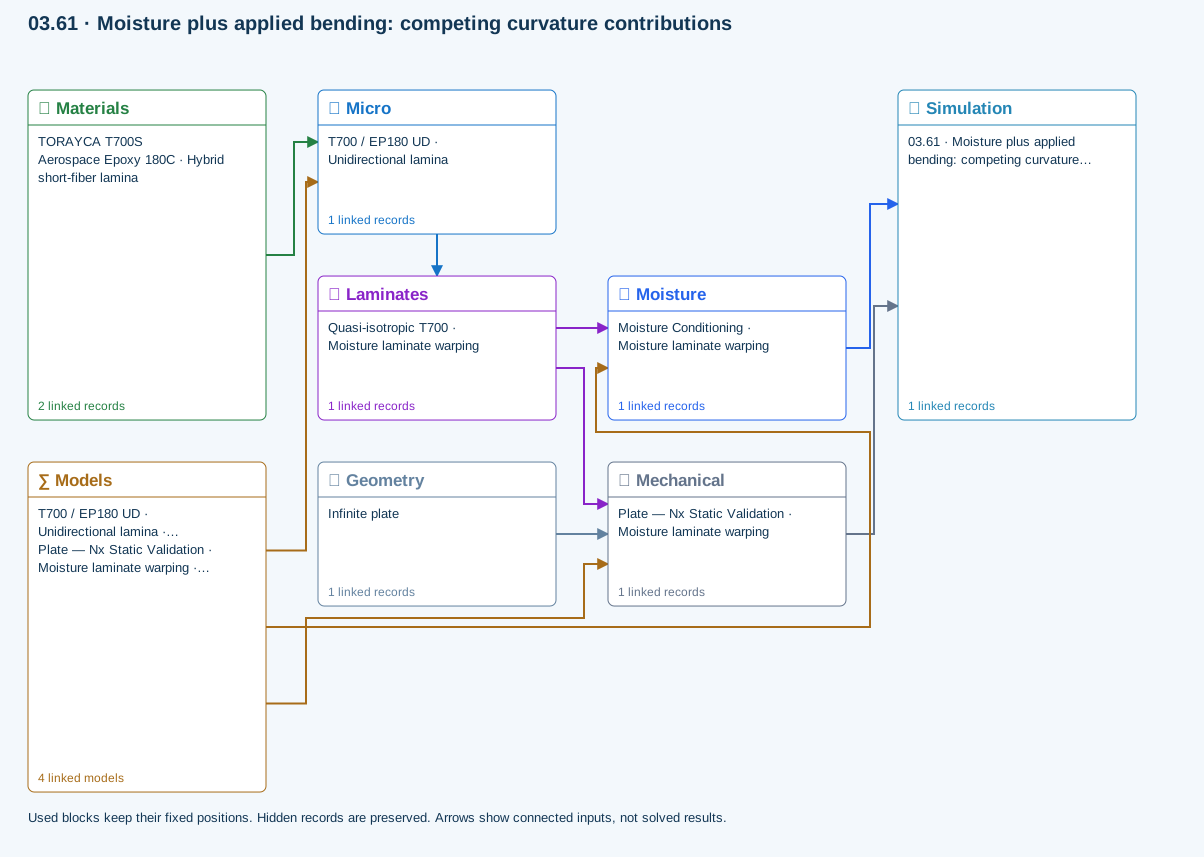
03.61 · Moisture plus applied bending: competing curvature contributions →

Level 4
Advanced
Est. 40 min
View fixed-layout exercise workflow
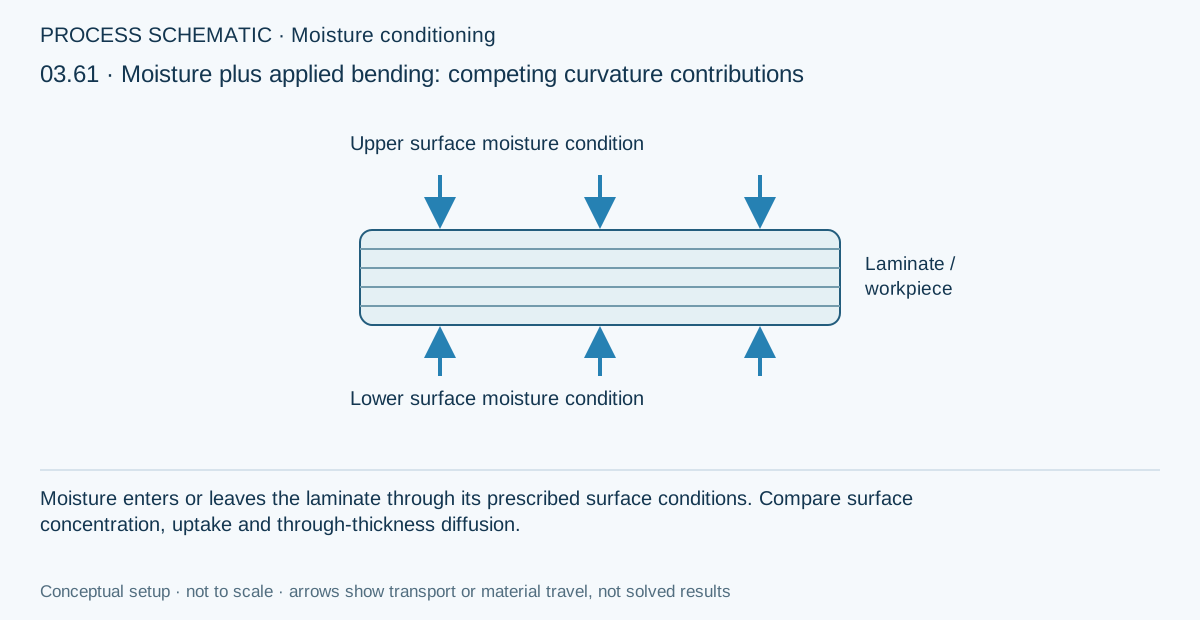
Physical process schematic · Open full-size schematic ↗
03.61 · Moisture plus applied bending: competing curvature contributions — Moisture enters or leaves the laminate through its prescribed surface conditions. Compare surface concentration, uptake and through-thickness diffusion.

Conceptual setup, not a solved result. Use the existing live process view in Workbench to inspect this exercise’s linked equipment, boundary settings and results.

Exercise workflow · Open full-size map ↗

All blocks keep the CREATE / DISCOVER / SIMULATE positions, with Equipment below Geometry; unused records remain disconnected. This changes the view only, not the exercise records.

03.61 · Moisture plus applied bending: competing curvature contributions · Fixed layout with all supplied blocks · not solved results

Run the unsymmetric conditioned laminate with Nx = 25,000 N/m and Mx = 5 N per unit width.

1D transient moisture diffusion · Classical laminate theory · Hygromechanical coupling · Extension–bending coupling

Teaching inputs, not qualified allowables. Sequential coupling transfers the reported thermal/moisture state to laminate mechanics; it is not simultaneous 3D multiphysics. Inspect the transferred state and reference values before interpreting stress or curvature. No moisture-driven damage, swelling-dependent diffusion or experimentally calibrated strength degradation.

Illustrative study · not presented as a verified benchmark.

Processing

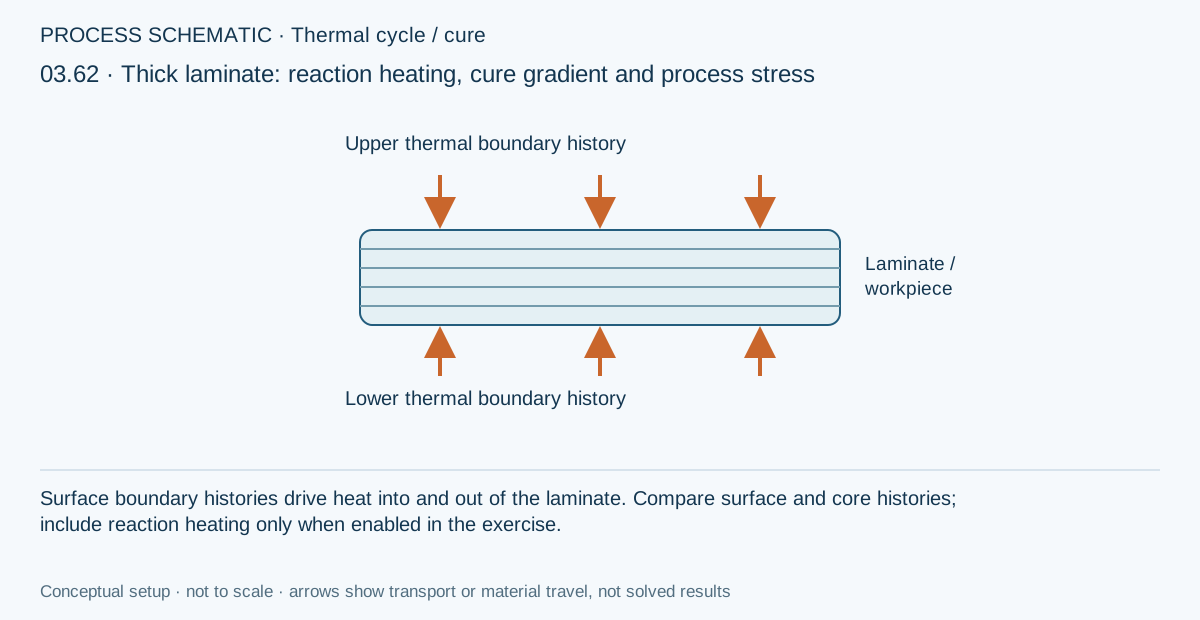
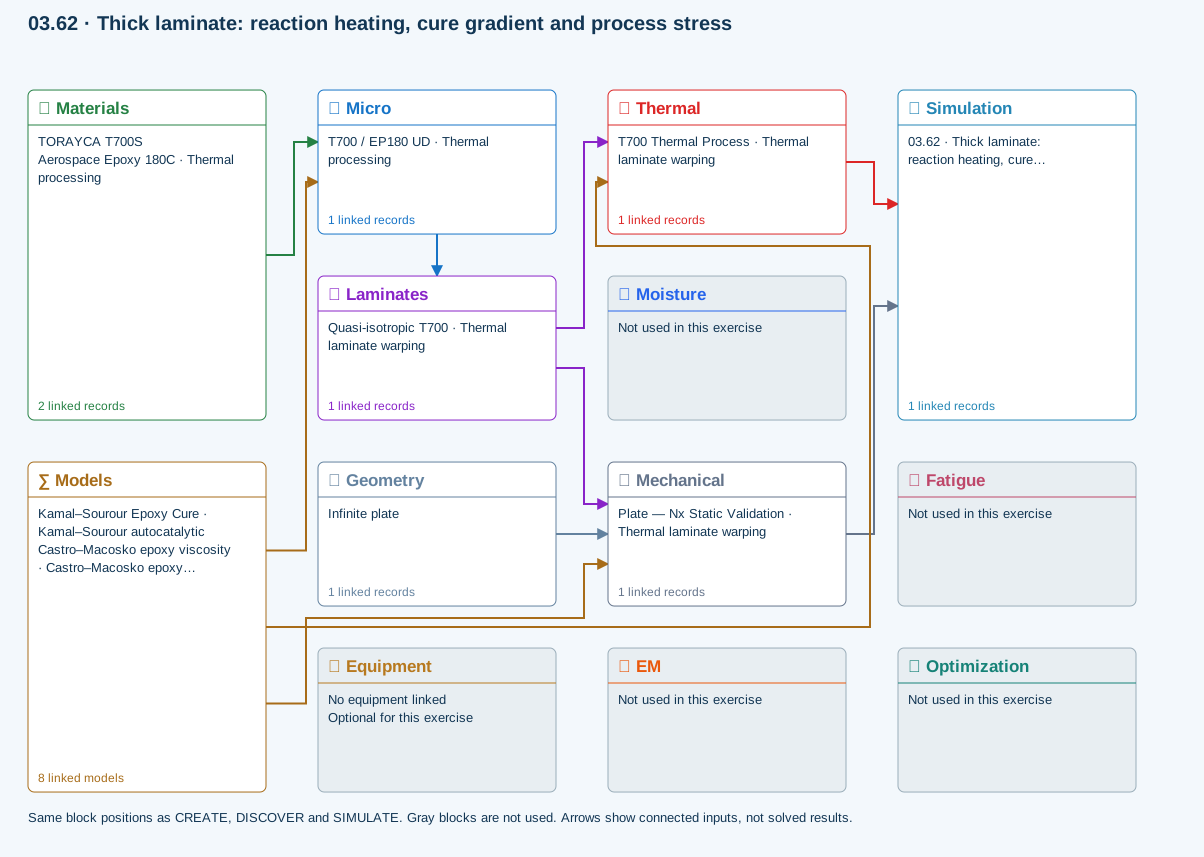
03.62 · Thick laminate: reaction heating, cure gradient and process stress →

Level 4
Advanced
Est. 40 min
View fixed-layout exercise workflow
Physical process schematic · Open full-size schematic ↗
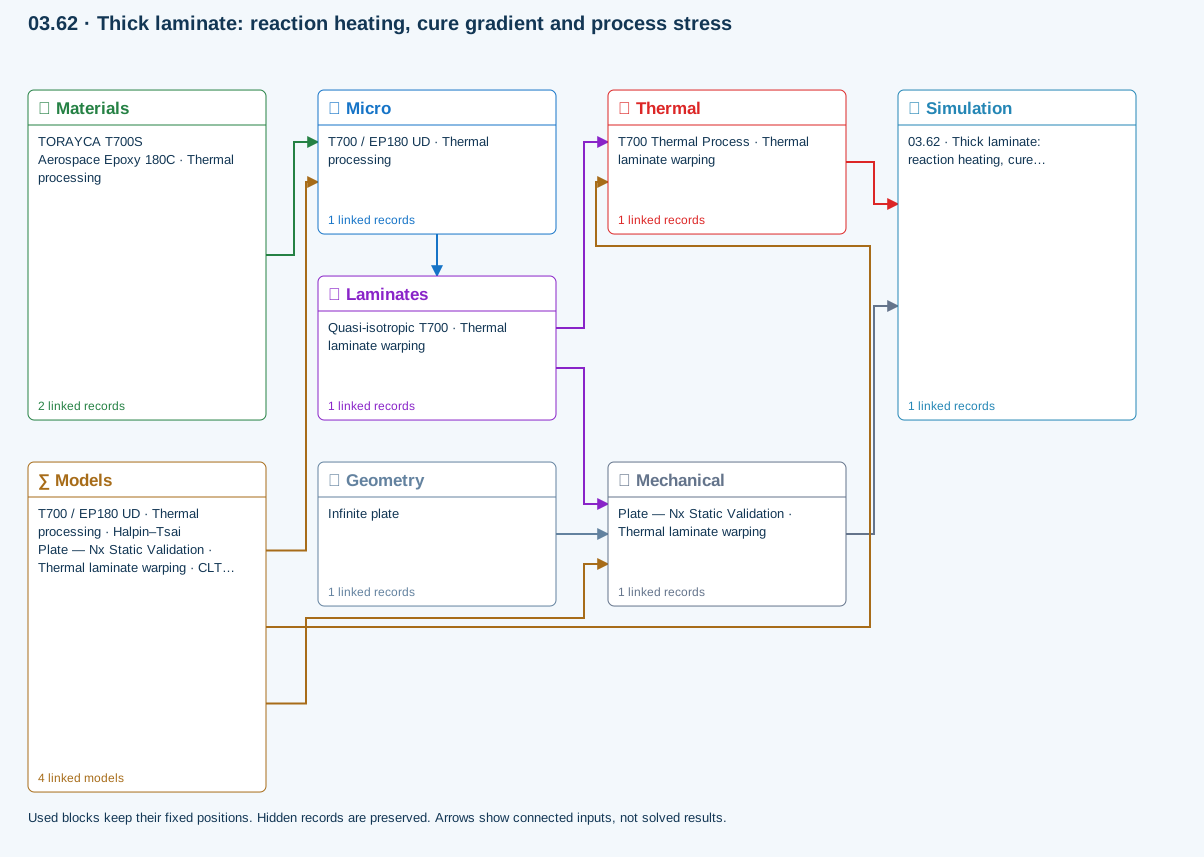
03.62 · Thick laminate: reaction heating, cure gradient and process stress — Surface boundary histories drive heat into and out of the laminate. Compare surface and core histories; include reaction heating only when enabled in the exercise.

Conceptual setup, not a solved result. Use the existing live process view in Workbench to inspect this exercise’s linked equipment, boundary settings and results.

Exercise workflow · Open full-size map ↗

All blocks keep the CREATE / DISCOVER / SIMULATE positions, with Equipment below Geometry; unused records remain disconnected. This changes the view only, not the exercise records.

03.62 · Thick laminate: reaction heating, cure gradient and process stress · Fixed layout with all supplied blocks · not solved results

Run the 6 mm laminate through the 120°C dwell with its linked resin reaction heat.

Heat transfer · Classical laminate theory · Extension–bending coupling · Thermomechanical coupling

Teaching inputs, not qualified allowables. Sequential coupling transfers the reported thermal/moisture state to laminate mechanics; it is not simultaneous 3D multiphysics. Inspect the transferred state and reference values before interpreting stress or curvature. Free laminate CLT curvature, not fixture-constrained distortion, a full tool-release simulation or calibrated cure-shrinkage prediction.

Illustrative study · not presented as a verified benchmark.

Original examples, within the curriculum

25 original stored-data studies already have exercise records, with source filenames, defined tasks and explicit limitations. Continue with these records instead of maintaining a second copy of the inputs.

Browse the converted studies

Historical reference examples

The older web examples remain available for their sources and calculation context. They are historical demonstrations, not a statement of current Workbench verification.